

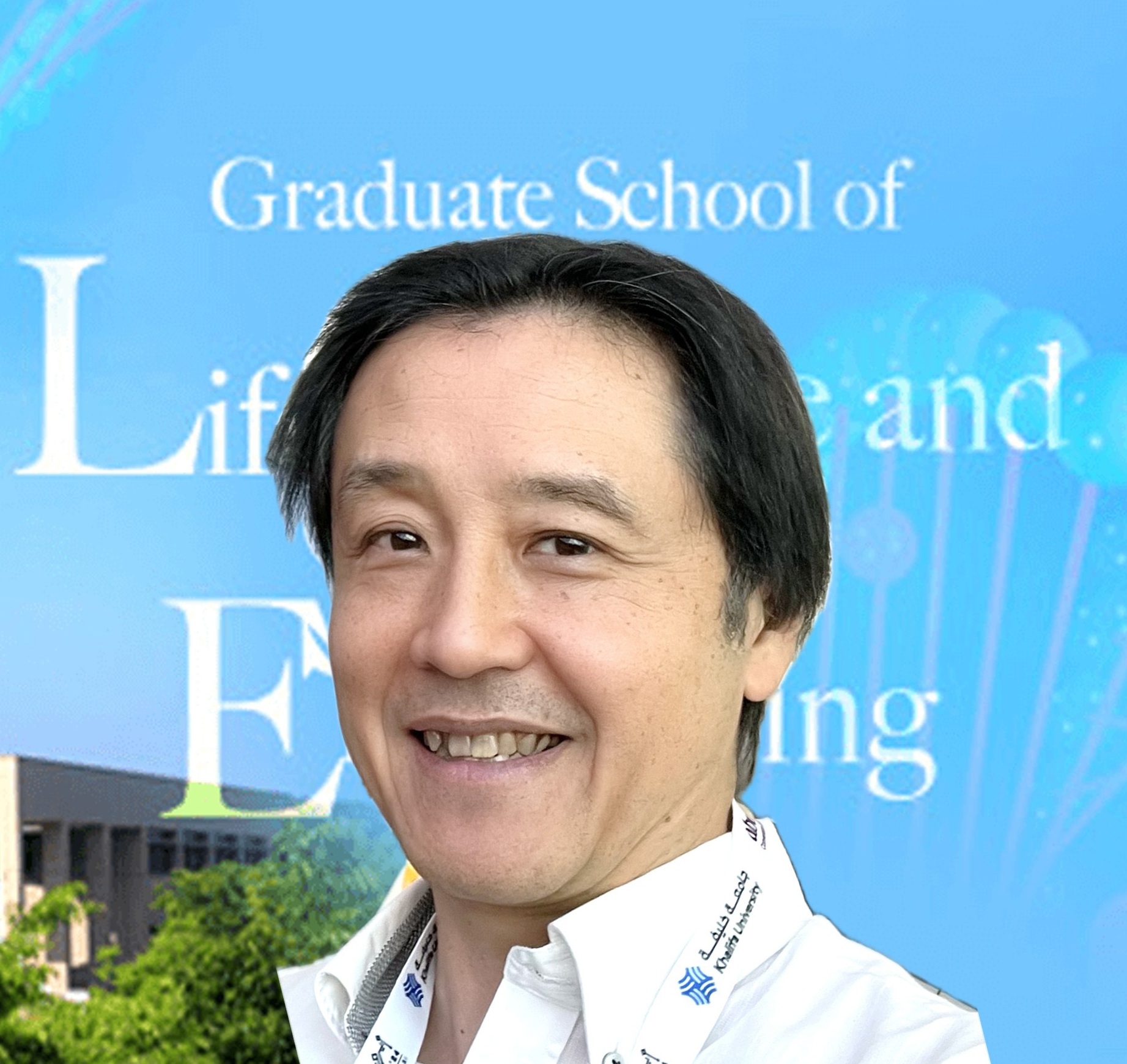
Japan’s super-aging society has positioned the country as a global frontrunner in care and assistive robotics. Through national programs led by the Ministry of Health, Labour and Welfare and the Ministry of Economy, Trade and Industry, platforms for the development, demonstration, and dissemination of care robots have been systematically promoted. This keynote presents these national initiatives alongside representative research from the Shibata Laboratory, including an imitation-learning-based dressing assistance robot, a wearable artificial-muscle-powered walking assist robot, and an assistive robotic walker. Focusing on systems advancing toward real-world use, the talk discusses how control and physical human–robot interaction must be integrated with usability, safety, institutional constraints, and user acceptance to achieve sustainable social deployment.
Tomohiro Shibata received Ph.D. from the University of Tokyo, Japan, in 1996, continued his robotics study as a JSPS (Japan Society for the Promotion of Sciences) researcher, and then worked on computational neuroscience research using a humanoid robot at ATR (Advanced Telecommunication Research Institute) as a JST (Japan Science and Technology) researcher. After working as an associate professor at Nara Institute of Science and Technology in robotics, computational neuroscience, and assisted living, he currently works as a professor at Kyushu Institute of Technology, Kitakyushu, Japan. He also organizes the Smart Life Care Co-Creation Laboratory, which the Ministry of Health, Labor and Welfare use for a project to develop, demonstrate, and promote nursing care robots.He is also heavily involved in international initiatives and serves as the project officer for the Japan-Singapore international joint project under the Japan Science and Technology Agency's NEXUS program.
He received a young investigator award from the Robotics Society of Japan (1992), the Best Paper Award from the Japanese Neural Network Society (2002 and 2015), the Neuroscience Research Excellent Paper Award from the Japan Neuroscience Society (2007), the Best Application Paper Award of IROS 2015 (2015), Excellent Paper Award from the RSJ (2020), Best Presentation Award of ICIEV and icIVPR (2021), the Winner in the Healthcare Category of Garmin Healthcare Awards (2022), and others.
He was an editorial board member of Neural Networks and an executive board member of the Robotics Society of Japan (RSJ). He is currently an executive board member of the Japanese Neural Network Society (JNNS), a fellow of the RSJ, a member of the International Exchange Committee of the RSJ, and the head of the special interest group on "Nursing Care Robots" of the RSJ. He is also a member of IEEE, a governing council member of The Robotics Society (of India), a member of JSME, and the Society for Nursing Science and Engineering.
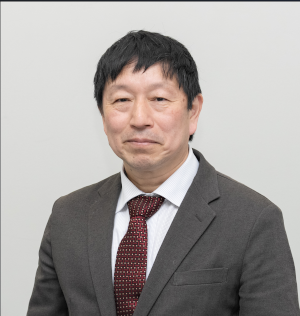
In recent years, advances in marine development and research have become increasingly important for protecting the marine environment and exploring valuable deep-sea resources. However, marine equipment such as ROVs (remotely operated vehicles) and AUVs (autonomous underwater vehicles) is often very expensive. Therefore, there is a strong need for a low-cost, easy-to-operate system for underwater observation and exploration. To address this need, the authors focus on a free-fall type underwater observation system (UOS), which can be realized at low cost and is simple to deploy. The system uses a glass-sphere pressure housing that can withstand depths of up to 7,800 m. The presentation introduces a recent free-fall UOS that captured the world’s first 3D video of the seafloor at a depth of 7,800 m. In addition, the feasibility of underwater positioning is investigated using a micro-electro-mechanical-systems (MEMS) inertial measurement unit (IMU) integrated into the developed camera system. Our research group is also developing an in situ ocean microplastic observation system by further improving the glass-sphere free-fall UOS.
Yoshikazu Koike received the B.Eng., M.Eng., and Dr.Eng. degrees from Tokyo Institute of Technology (now Institute of Science Tokyo), Tokyo, Japan, in 1989, 1991, and 2000, respectively. From 1993 to 2000, he was a Research Associate with the Precision and Intelligence Laboratory (now Laboratory for Future Interdisciplinary Research of Science and Technology) Tokyo Institute of Technology. He is currently a Professor at Shibaura Institute of Technology, Tokyo, Japan. His research focuses on ultrasonic applications. Recently, his interests have expanded to ocean monitoring systems and inertial navigation systems. Prof. Koike is a member of the Acoustical Society of Japan and the Institute of Electronics, Information and Communication Engineers.

Robotic systems are increasingly required to operate autonomously in complex, dynamic environments while facing strict constraints on energy consumption, latency, and reliability. This keynote explores how efficient sensing systems and Edge AI are enabling a new generation of intelligent robots that move beyond cloud-dependent paradigms. The talk will present recent research on multi-modal sensing architectures, combining vision, radar, inertial sensors, and ultra-wideband technologies, tightly integrated with embedded AI. By leveraging hardware–software co-design, event-driven sensing, and lightweight learning models, these systems achieve real-time perception and decision-making directly at the edge, enabling long-term and scalable robotic deployments. A central theme of the keynote is the emerging concept of Physical AI, where intelligence is not only defined by algorithms, but also by the physical interaction between sensors, computation, and the environment. Examples from mobile robots such as nano-drone and autonomous platforms including quadruped robots and autonomous racing cars will demonstrate how exploiting physical constraints can lead to more robust, efficient, and adaptive robotic behaviour. The keynote will discuss also about current challenges and future trends, highlighting opportunities at the intersection of image processing, embedded systems, and robotics, and outlining a roadmap toward sustainable, resilient, and truly autonomous mobile robotic intelligence.
Michele Magno (Fellow Member, IEEE) He is Head of the Project-Based Learning Center at ETH Zurich and EdgeAI and Sensing System Lab. He is also Fellow at IT:U Austria, Michele Magno contributes to the development of new academic initiatives within the IT:U Smart Space Sensing and Systems Lab (S³ Lab) and the IT:U Satellite Lab. His main research interests include wireless sensor networks, wearable devices, machine learning at the edge, smart sensors and autonomous robots, energy harvesting, low-power management techniques, and extending the lifetime of battery-operated devices. He has collaborated with several universities and research centers including industry cooperation with IBM Research, Sony, STMicroelectronics, Infineon, Ferrari and many others. He has published more than 400 papers in international journals and conferences and has received multiple Best Paper and Best Poster awards.

This keynote introduces Creative Robotics as an emerging approach that shifts robotics beyond task-oriented functionality toward emotional expression, artistic agency, and human–robot co-creation. Drawing on interdisciplinary research at the intersection of robotics and art, the talk explores how robots can be designed to sense, express, and engage with human emotions.
Through selected experimental robotic systems, the keynote demonstrates how creativity can function as a core design principle. These projects challenge conventional definitions of intelligence and interaction, presenting robots as expressive entities and creative collaborators.
By framing robotics as a medium for emotional communication and cultural reflection, this talk highlights the potential of creative robotics to influence future applications in art, social interaction, and humanity cantered technology, ultimately redefining how robots relate to and coexist with humans.
Dr Hooman Samani is a creative roboticist specialising in creative interdisciplinary AI-Driven Social Service Robotics, based in London, United Kingdom. He is a Reader in Creative Robotics and Course Leader of Creative Robotics (BSc) at the University of the Arts London, Creative Computing Institute. He is a Fellow of the Higher Education Academy (FHEA).
Throughout his career, he has held various academic and industry positions, including as a Senior Lecturer and Course Leader of Creative Robotics (BSc and MSc) at the University of the Arts London, Creative Computing Institute; Senior Lecturer in Robotics and Artificial Intelligence and member of the Robotics Research Group at the University of Hertfordshire, UK; Lecturer in Machine Learning and AI for Robotics at the University of Plymouth, UK; Associate Professor and founder and director of the AIART Lab (Artificial Intelligence and Robotics Technology Laboratory) at National Taipei University of Taiwan; Visiting researcher at the MIT Media Lab, USA; Research Fellow at the Keio-NUS CUTE Centre, a joint research centre between the National University of Singapore and Keio University of Japan; Engineer at Posco in South Korea; and Robotics Researcher at the Social Robotics Lab of NUS, Philips in the Netherlands and Fraunhofer in Germany. He holds a PhD in Robotics from the National University of Singapore.
Hooman has contributed to more than 100 publications in the field of robotics, comprising peer-reviewed journal articles, conference papers, and books. His books explore emerging fields of robotics, including Creative Robotics, Robotics for Pandemics, Cognitive Robotics and Lovotics: Loving Robots. He actively contributes to various robotics related journals and conferences, serving as an editorial board member, organising committee member, workshop organiser, reviewer, and author. He has also gained valuable industry experience in various R&D projects in different industrial sectors.
Copyright © 2020- 2026 ICIPRoB 2026 - International Conference on Image Processing and Robotics. All rights are reserved.

